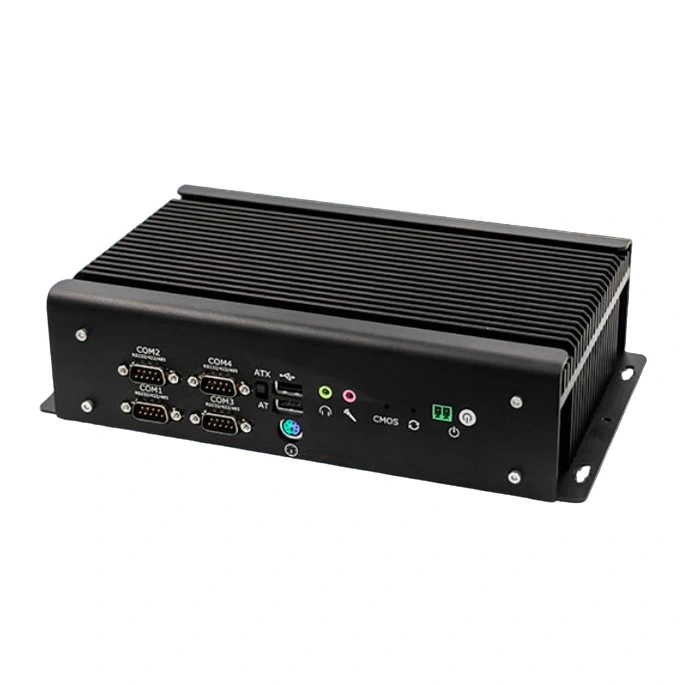
As Industry 4.0 and smart manufacturing accelerate, Industrial Internet of Things (IIoT) integration has become essential for industrial rack PCs. These systems serve as central hubs in factories, collecting data from sensors, controlling machinery, and enabling real-time analytics through seamless connectivity. Robust networking capabilities ensure reliable data flow, low latency, and secure communication in demanding environments. This article examines key networking features, expansion options, and best practices for IoT integration in industrial rackmount PCs. For foundational knowledge, see our Ultimate Guide to Industrial Rackmount PCs: Features, Applications, and Selection Tips.
Industrial rack PCs act as edge gateways or controllers in IIoT architectures, bridging operational technology (OT) devices like PLCs, sensors, and actuators with information technology (IT) systems such as cloud platforms and enterprise software. Effective networking supports:
· Real-time data acquisition and processing
· Predictive maintenance and remote monitoring
· Scalable connectivity across distributed sites
· Secure data transmission in harsh conditions
High-impression queries related to industrial connectivity highlight the demand for versatile, reliable options that handle diverse protocols and interfaces.
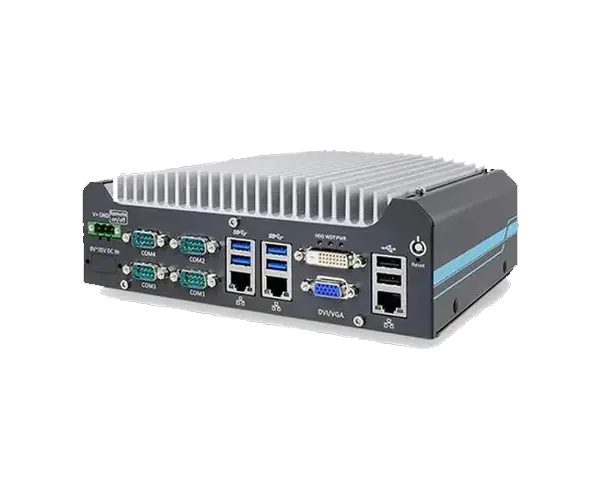
Modern industrial rackmount PCs offer extensive built-in and expandable networking to support IIoT demands:
Many models feature dual or quad Gigabit Ethernet ports, with some supporting 2.5G/10G/25G for high-bandwidth applications. Features like link aggregation (LACP) provide redundancy and increased throughput.
Advanced options include SFP+ slots for fiber optics, enabling long-distance, noise-immune connections in large facilities.
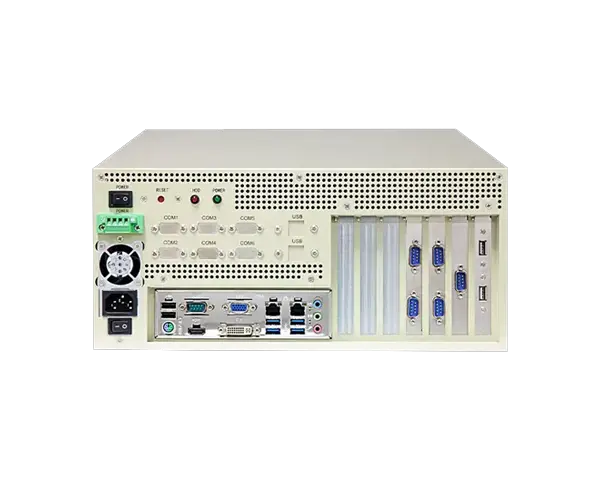
Industrial environments often use legacy equipment, so rack PCs include multiple RS-232/422/485 ports for Modbus RTU, Profibus, or CAN bus integration. This allows seamless connection to older PLCs and sensors.
Built-in or modular Wi-Fi, Bluetooth, 4G/5G LTE, and LoRaWAN options enable wireless sensor networks and remote sites without cabling. Cellular fallback ensures connectivity in areas with unreliable wired infrastructure.
PCIe slots (x4, x8, x16) allow addition of network interface cards (NICs), multi-port Ethernet adapters, or specialized modules like fieldbus cards.
This modularity supports future-proofing and adaptation to evolving IoT protocols.
Here's a comparison table of common networking configurations:
Feature | Entry-Level Rack PC | Mid-Range Industrial | High-End IIoT-Focused |
Ethernet Ports | 2x Gigabit | 4x Gigabit + 2.5G | 4x 10G + SFP+ |
Serial Ports | 2x RS-232/485 | 4-6x RS-232/422/485 | 8+ with isolation |
Wireless Options | Optional Wi-Fi | Wi-Fi 6 + 4G LTE | 5G + LoRaWAN |
PCIe Expansion Slots | 1-2 | 3-4 | 4+ with GPU/NIC support |
Protocol Support | Modbus TCP | OPC UA, MQTT, EtherCAT | Full IIoT stack + TSN |
Redundancy | Basic failover | Link aggregation | Dual NIC + PRP/HSR |
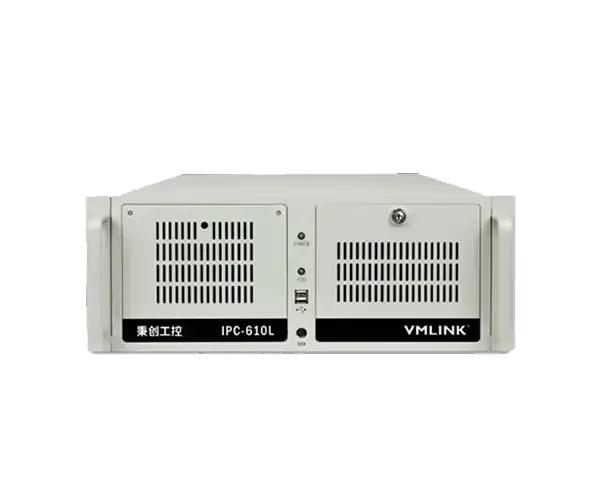
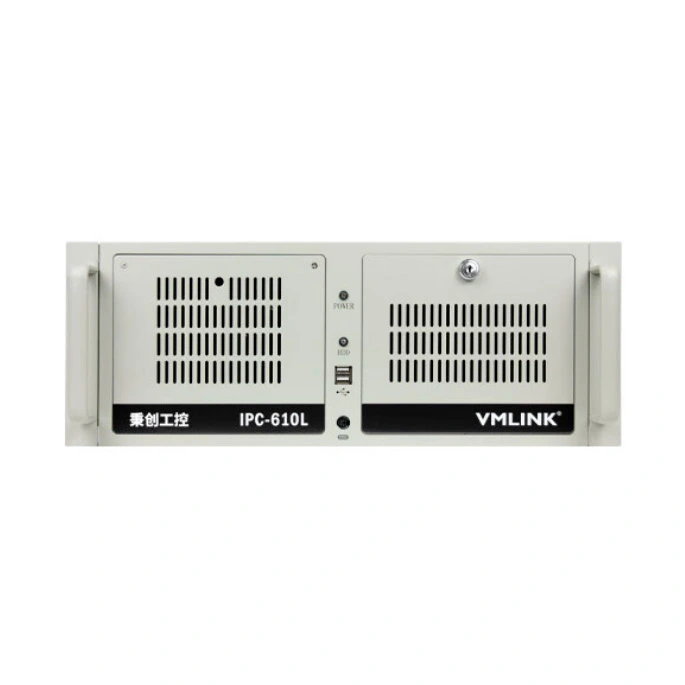
For examples of high-connectivity models, explore our IPC-610L series with multiple LAN ports and expansion flexibility.
To maximize networking effectiveness in IIoT setups:
1. Choose Compatible Protocols: Prioritize OPC UA, MQTT, and MQTT over WebSockets for secure, lightweight data exchange to cloud platforms like AWS IoT, Azure IoT, or on-prem systems.
2. Implement Edge Computing: Process data locally on the rack PC to reduce latency and bandwidth usage before cloud transmission.
3. Ensure Network Security: Use VLANs, firewalls, VPNs, and certificate-based authentication. Look for TPM 2.0 support and secure boot in rack PCs.
4. Leverage Gateways and Converters: For legacy integration, add IIoT gateways via serial or Ethernet to translate protocols.
1. Monitor and Optimize: Use SNMP, NetFlow, or built-in tools for traffic analysis and predictive fault detection.
2. Plan for Scalability: Select rack PCs with ample I/O and PCIe slots to accommodate growing sensor networks.
For related durability in connected environments, refer to Durability and Reliability in Harsh Environments for Industrial Rack PCs and thermal considerations in Temperature Management in Industrial Rack PCs: Best Practices for Harsh Environments.
In smart factories, rack PCs with multi-port Ethernet and OPC UA collect data from hundreds of sensors, enabling predictive maintenance and reducing downtime by up to 30%. In energy monitoring, 5G-enabled systems provide remote oversight of distributed assets. These capabilities drive efficiency in high-demand IIoT scenarios.
Strong networking capabilities—ranging from high-speed Ethernet and serial support to PCIe expansion and wireless options—are vital for successful IoT integration in industrial rack PCs. These features enable seamless connectivity, data-driven decisions, and future-proof systems in industrial automation.
Thank you for your attention on Vmlink Industrial PC!
Please fill the form to let us know your need. We will get in touch with you ASAP.
 English
 한국어
한국어 français
 Deutsch
 Español
 italiano
 русский
 português
 العربية
 Ελλάδα
 Nederland